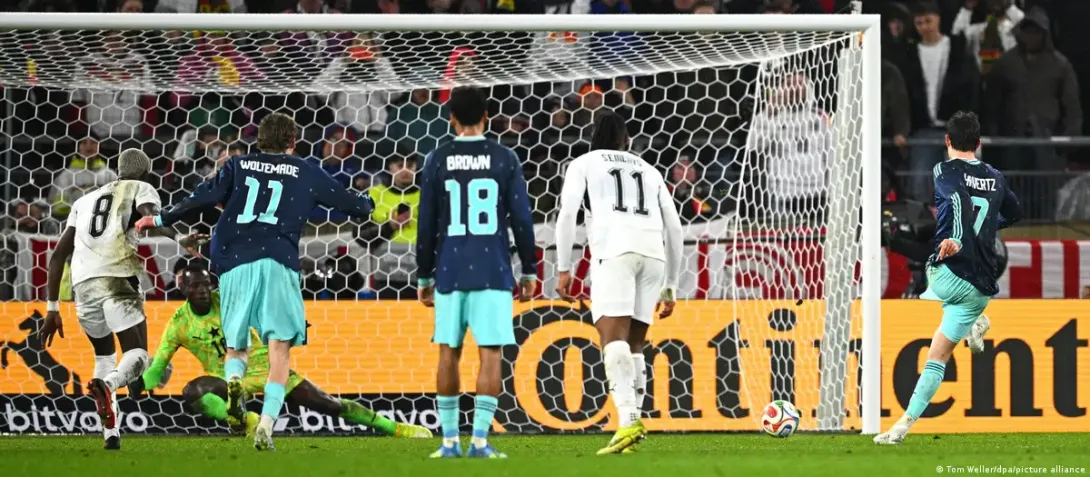
The Germany national football team secured a hard-fought 2–1 victory against the Ghana national football team in an international friendly held in Stuttgart. The match served as an important preparatory fixture for both teams as they fine-tune tactics and evaluate squad depth ahead of upcoming international competitions. Germany demonstrated greater control in midfield and capitalized on key scoring opportunities, while Ghana responded with resilience and attacking intent. Although the match did not carry tournament implications, it offered meaningful insights into team strategies, player performance, and the evolving dynamics of global football competition.
Stuttgart Hosts Competitive International Encounter
The friendly match between Germany and Ghana drew considerable attention from football observers as both sides used the fixture to refine tactical systems. Hosted in Stuttgart, the contest provided a high-quality competitive environment despite its non-tournament status.
International friendlies remain a vital component of modern football planning. Coaches rely on these matches to evaluate player combinations, experiment with formations, and identify areas for improvement before entering major competitions.
For Germany, the game represented another step in strengthening team cohesion. Ghana, meanwhile, approached the fixture with the aim of measuring its progress against one of Europe’s most historically successful football nations.
Germany’s Tactical Discipline Secures Victory
Germany’s performance reflected its traditional emphasis on structure, ball control, and disciplined tactical execution. From the early stages of the match, the team maintained possession and orchestrated attacking sequences through coordinated midfield play.
Two decisive scoring moments ultimately determined the outcome. Germany’s forwards demonstrated efficiency in front of goal, converting opportunities created through patient buildup and precise passing.
Equally important was Germany’s defensive organization, which limited Ghana’s ability to create sustained pressure in the attacking third. This balance between offensive initiative and defensive stability proved crucial in securing the 2–1 result.
Ghana Displays Determination Despite Defeat
Ghana delivered a spirited performance and managed to challenge Germany throughout the match. The team’s ability to score and maintain competitive intensity highlighted the growing strength of African football on the international stage.
However, Ghana struggled to maintain prolonged control in midfield against Germany’s well-coordinated structure. Defensive lapses at critical moments allowed the hosts to capitalize and ultimately secure the victory.
Despite the loss, Ghana’s display offered encouraging signs, particularly in its attacking transitions and willingness to compete against elite opposition.
Strategic Role of Friendly Matches
International friendlies play a significant role in shaping national team development. Beyond entertainment value, these fixtures provide coaches with the flexibility to test emerging players, adjust tactical approaches, and analyze match performance under realistic conditions.
For Germany, the narrow win reinforces confidence while offering insights into areas that require further refinement. For Ghana, the match provides valuable lessons that can guide future preparations for continental and global competitions.
From a broader perspective, such matches also contribute to the football industry’s economic ecosystem through broadcasting revenues, sponsorship exposure, and global fan engagement.
Looking Ahead
Germany’s 2–1 triumph over Ghana underscores the competitive nature of international friendlies and the importance of strategic preparation in modern football. While Germany demonstrated its characteristic tactical discipline, Ghana’s performance revealed promising potential and resilience.
As both teams shift their focus toward upcoming tournaments and qualification campaigns, the lessons derived from this match will play a crucial role in shaping their future strategies and performance on the international stage.
Comments