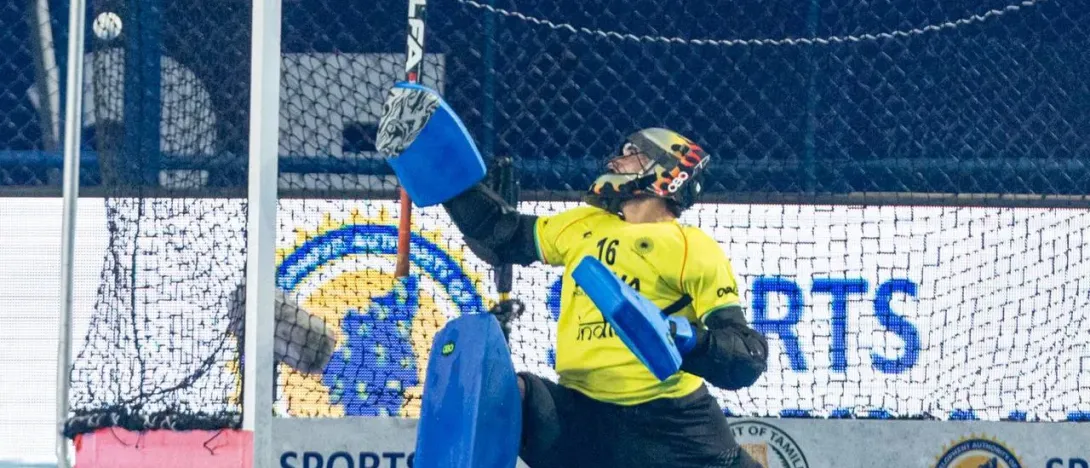
A quiet sporting transformation is taking shape in Bihar, where former Indian hockey player Ajitesh Roy is attempting to revive the state’s long-dormant connection with elite hockey. Through the establishment of the RK Roy Hockey Academy in Patna in 2018, Roy set out with a singular objective: to develop a sustainable pathway for young players from Bihar to reach the Indian national team. The initiative addresses a decades-long vacuum in the state’s hockey ecosystem following the bifurcation that created Jharkhand. Despite sporadic junior-level representation, Bihar has struggled to produce senior internationals. Roy’s academy now represents both a grassroots sporting mission and a broader blueprint for regional sports development.
A Mission Rooted in Legacy and Absence
When former India hockey player Ajitesh Roy launched the RK Roy Hockey Academy in Patna in 2018, the decision was driven less by commercial ambition and more by institutional necessity. Bihar, despite its large youth population and deep sporting enthusiasm, had gradually disappeared from India’s elite hockey map.
For Roy, the absence was deeply personal. Following the creation of Jharkhand in 2000, Bihar’s contribution to Indian hockey sharply declined. In the years that followed, Roy remained the only player from the reorganized Bihar region to represent the Indian senior men’s hockey team — a statistic that exposed the structural deterioration of the sport within the state.
Although several players from Bihar periodically earned places in junior national camps, the progression system required to transition them into senior international hockey remained weak, fragmented, and underfunded.
Roy’s academy was conceived as a corrective intervention.
Bihar’s Sporting Infrastructure Gap
The decline of hockey in Bihar reflects a broader issue confronting several Indian states outside established sporting powerhouses. While regions such as Odisha, Haryana, Punjab, and Jharkhand have benefited from targeted investment, corporate sponsorship, and institutional support, Bihar’s sports infrastructure has lagged behind for decades.
The consequences have been severe. Limited access to professional coaching, inadequate playing surfaces, poor exposure to national-level tournaments, and inconsistent grassroots funding have collectively restricted athlete development.
Industry observers argue that talent scarcity has never been Bihar’s problem. Instead, the state has historically lacked structured sporting ecosystems capable of identifying and nurturing young athletes over extended developmental cycles.
In that context, the RK Roy Hockey Academy represents more than a training center. It is effectively functioning as an independent high-performance ecosystem attempting to bridge institutional deficiencies that have persisted for years.
Building a Sustainable Talent Pipeline
Roy’s long-term objective extends beyond producing isolated success stories. His broader ambition is to establish a continuous talent pipeline capable of sending players from Bihar into national junior and senior hockey structures on a recurring basis.
That approach aligns with modern athlete development models increasingly adopted across global sports systems. Rather than focusing solely on short-term tournament outcomes, sustainable academies prioritize technical training, physical conditioning, tactical awareness, psychological preparation, and exposure to competitive environments from an early age.
The academy’s work also highlights the growing importance of localized sports entrepreneurship in India. Former athletes are increasingly stepping into developmental roles once handled primarily by state federations. In many cases, these private or semi-private initiatives are proving more agile and outcome-oriented than traditional administrative structures.
Roy’s initiative demonstrates how retired athletes can leverage experience, credibility, and regional understanding to create grassroots sporting infrastructure where institutional support remains limited.
Hockey’s Commercial and Cultural Transformation
The timing of Bihar’s hockey revival efforts coincides with a broader resurgence of the sport within India. Increased visibility through international tournaments, stronger performances by the Indian men’s and women’s teams, and expanding media coverage have collectively improved hockey’s commercial viability.
Corporate investment and state-backed sponsorship models — particularly those seen in Odisha — have altered perceptions surrounding the sport’s economic potential. Hockey is no longer viewed merely as a legacy discipline tied to India’s historical successes; it is increasingly being repositioned as a modern, professionally managed sporting product.
This changing landscape creates new opportunities for emerging regions such as Bihar. With stronger national interest in hockey, talent from previously overlooked states now has a greater chance of attracting selectors, sponsors, and developmental support.
However, experts caution that long-term success will depend on whether states can institutionalize grassroots structures rather than relying exclusively on isolated academies or individual efforts.
The Economics of Grassroots Sports Development
Grassroots academies such as RK Roy Hockey Academy also illuminate an important but often overlooked dimension of India’s sports economy: early-stage athlete investment.
While elite competitions attract media attention and sponsorship revenue, the foundational stages of athlete development frequently remain financially vulnerable. Training facilities, equipment procurement, nutrition programs, travel expenses, and tournament participation require sustained funding that many regional academies struggle to secure.
For Bihar, investment in sports infrastructure could generate benefits extending beyond athletics alone. Sports development is increasingly linked to youth engagement, educational opportunity, local employment generation, and regional branding.
States that successfully cultivate sporting ecosystems often experience secondary economic gains through event hosting, tourism activity, and institutional partnerships. Bihar’s emerging hockey initiatives could therefore carry both social and economic significance over the long term.
A Long Road Back to National Relevance
Despite growing optimism, Bihar’s return to national hockey prominence remains a long-term project. Producing elite athletes requires patience, continuity, and systemic support that extends beyond individual academies.
Yet Roy’s initiative has already achieved something important: it has reopened the conversation around Bihar’s place within Indian hockey. For young athletes in the state, the academy represents proof that elite sporting aspirations remain attainable despite structural disadvantages.
In many ways, the project reflects a broader shift occurring across Indian sports — one in which regional ambition, private initiative, and grassroots development are beginning to challenge traditional centers of athletic power.
Whether Bihar ultimately produces its next India international remains uncertain. What is increasingly clear, however, is that the state’s hockey silence is no longer being accepted as permanent.
Comments