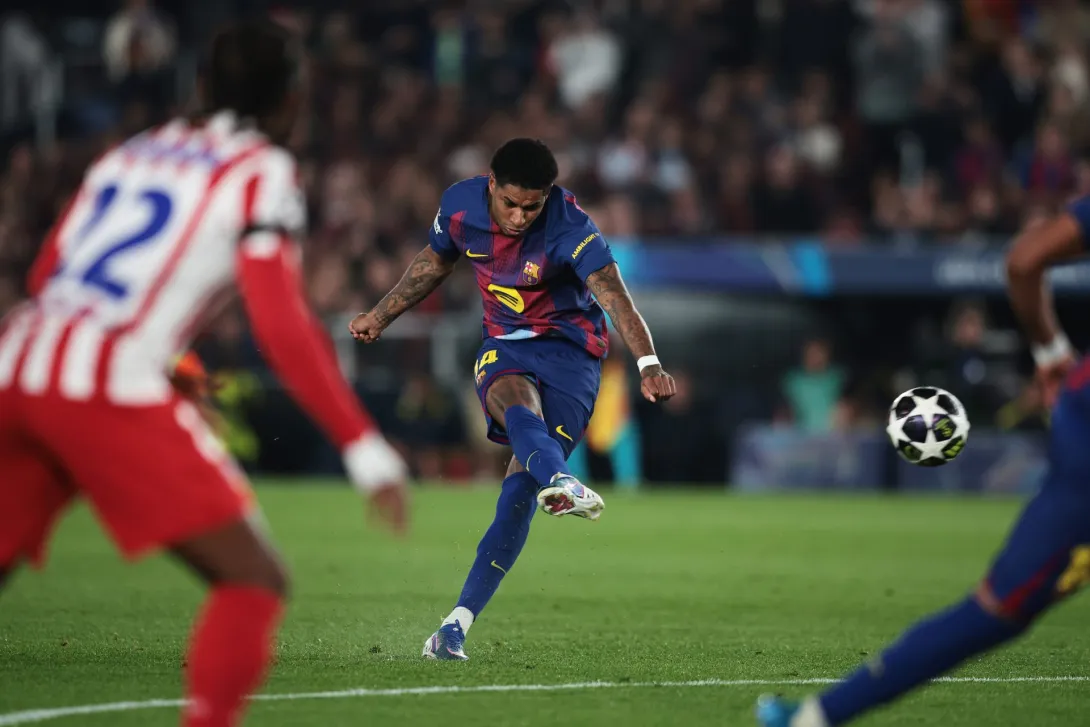
A pivotal moment in the clash between FC Barcelona and Atlético Madrid saw young defender Pau Cubarsí receive a red card, dramatically shifting the trajectory of the match. The dismissal not only impacted Barcelona’s tactical structure but also underscored the high-pressure environment of elite European football. Playing with ten men against a disciplined Atlético side amplified defensive vulnerabilities and altered competitive dynamics. Beyond the immediate sporting consequences, such incidents carry implications for team strategy, squad depth, and the broader commercial stakes tied to high-profile fixtures.
A Turning Point in a High-Stakes Encounter
The sending-off of Pau Cubarsí proved to be a decisive moment in what was already a tightly contested fixture. Matches between Barcelona and Atlético Madrid are historically defined by tactical discipline and fine margins, and the red card introduced a sudden imbalance.
Reduced to ten men, Barcelona faced an immediate structural challenge. The numerical disadvantage forced a recalibration of their approach, limiting attacking transitions while increasing defensive responsibilities across the pitch. Atlético Madrid, known for their organizational resilience, capitalized on the situation to assert greater control.
Tactical Repercussions and Strategic Adjustments
From a tactical standpoint, a red card in elite football necessitates rapid reconfiguration. Barcelona were compelled to shift into a more conservative setup, prioritizing defensive compactness over attacking fluidity.
Atlético Madrid, by contrast, leveraged their numerical superiority to dictate tempo and exploit spatial gaps. The incident highlighted the importance of discipline and situational awareness, particularly for emerging players operating under intense scrutiny at the highest level of the sport.
The Financial and Competitive Context
High-profile fixtures involving clubs like Barcelona and Atlético Madrid extend beyond the pitch, functioning as significant commercial assets within global football. Broadcast revenues, sponsorship visibility, and international viewership are all closely tied to the quality and competitiveness of such matches.
A red card incident, while primarily a sporting event, can influence match outcomes in ways that affect tournament standings, prize distributions, and brand perception. For clubs operating in a financially competitive ecosystem, even marginal disruptions can carry broader implications.
Player Development and Performance Pressure
For Pau Cubarsí, the dismissal represents a critical learning moment in an otherwise promising career trajectory. Young players in top-tier clubs are often required to balance aggression with composure, particularly in high-stakes encounters.
Such experiences, while challenging, contribute to long-term development by reinforcing the importance of decision-making under pressure. Clubs, in turn, must ensure that emerging talents are supported through both technical training and psychological resilience programs.
Conclusion
The red card issued to Pau Cubarsí in Barcelona’s clash with Atlético Madrid underscores the fragile equilibrium that defines elite football. A single moment can reshape tactical plans, competitive outcomes, and even financial implications. As the season progresses, both teams will reflect on this encounter—not merely as a result, but as a case study in discipline, adaptability, and the ever-present intersection of sport and business in modern football.
Comments